Sending volume
What Is Sender Rotation in Cold Email?
Learn how sender rotation distributes campaign messages across eligible mailboxes and where its operational limits are.
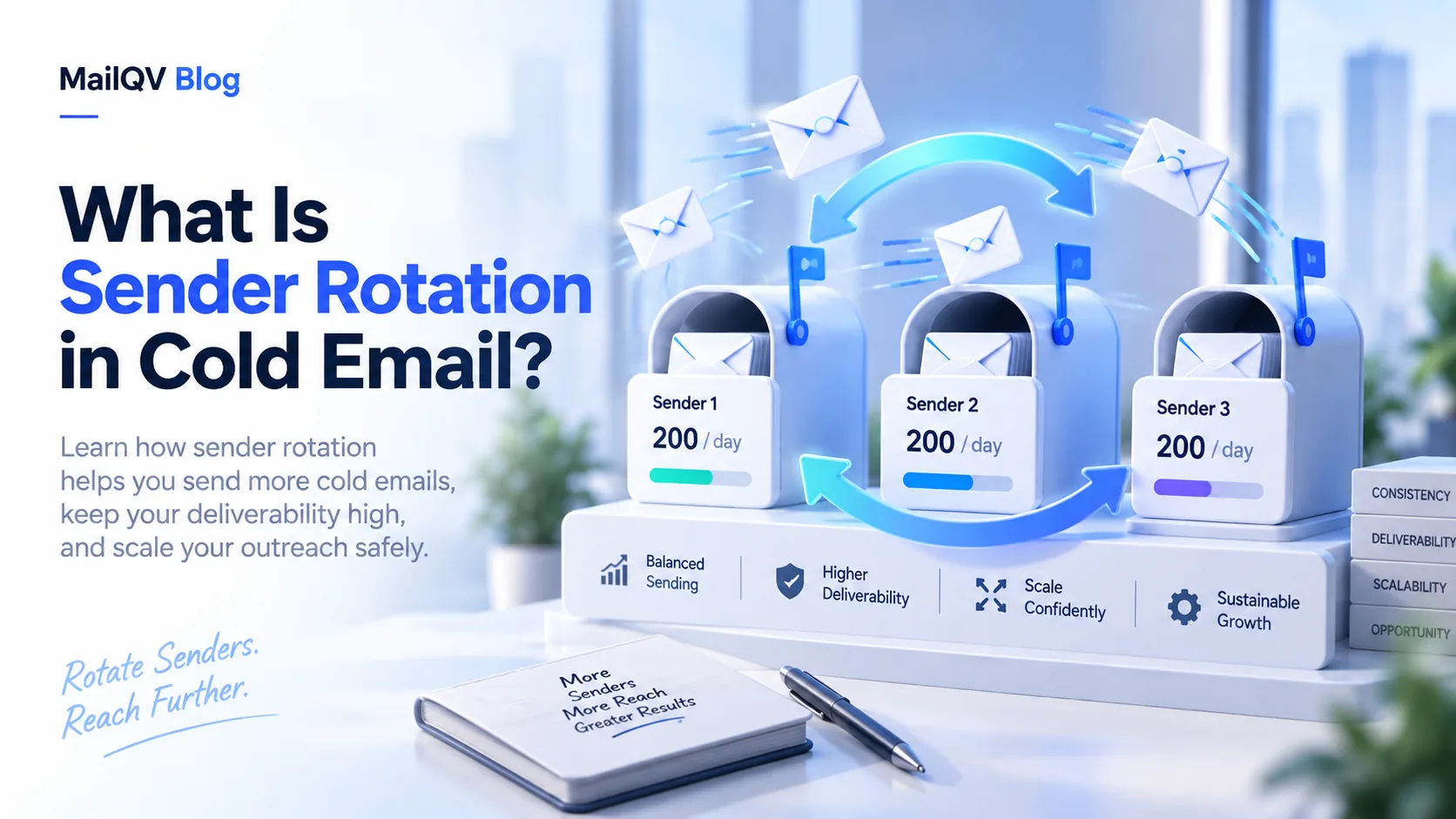
Sender rotation distributes campaign emails across a selected pool of sending mailboxes instead of routing every message through one inbox. It helps manage capacity, but it does not repair poor targeting, authentication or sender reputation.
How sender rotation works
Suppose a campaign uses three eligible mailboxes with configured limits of 25, 30 and 35 messages. The system can assign sends across the available 90 daily slots, skipping a mailbox that is paused, disconnected or already at its limit.
Good rotation preserves mailbox identity: replies return to the address that sent the message, and follow-up handling remains tied to the correct conversation.
What rotation does—and does not—solve
Rotation reduces concentration and makes capacity easier to plan. It cannot make an irrelevant list acceptable or guarantee inbox placement. Adding mailboxes also adds authentication, monitoring and reply work.
- Use only mailboxes you control.
- Keep a clear owner and reply path for every sender.
- Apply global suppression before sender selection.
- Stop pending steps when a reply is detected.
When to use it
Rotation is useful when legitimate campaign demand exceeds the deliberately configured capacity of one mailbox. MailQV lets a campaign use selected accounts while maintaining individual limits and eligibility checks.
Put it into practice
Run measured outreach with mailbox-level control.
MailQV connects sender rotation, sequences, contacts and campaign signals without claiming guaranteed inbox placement.