Email marketing
How to Measure a Mailing Campaign: KPIs and Reporting Guide
Learn how to measure a mailing campaign using delivery, bounce, opens, clicks, replies, conversions, unsubscribes, and actionable reporting.
Unlimited · runs in your browser
Estimate sending days and calendar duration for a full sequence.
Days between steps
Approximate calendar duration
62days · about 9 weeks
Sending days
39
Sequence delay days
7
First emails
2,000
Follow-ups
3,705
How it's calculated
No sending limit is universally safe. Provider rules, mailbox age, domain authentication, engagement, complaint rate, and account reputation change practical capacity.
Planning 2,000 contacts across 5 mailboxes? Use MailQV to rotate senders, schedule follow-ups, and monitor replies.
Start freeCalendar time is driven by two things: how many sending days the total volume needs, and the waiting time between sequence steps. Five-day sending stretches every week of sending to seven calendar days.
Add mailboxes to shorten sending days; shorten delays only if the follow-ups still read naturally.
Resources
Quick reads to help you plan audiences, sending volume, sequences and measurement before launch.

Email marketing
Learn how to measure a mailing campaign using delivery, bounce, opens, clicks, replies, conversions, unsubscribes, and actionable reporting.

Sending volume
Calculate a practical cold email daily volume from mailbox capacity, list quality and provider constraints—not a universal magic number.
Sending volume
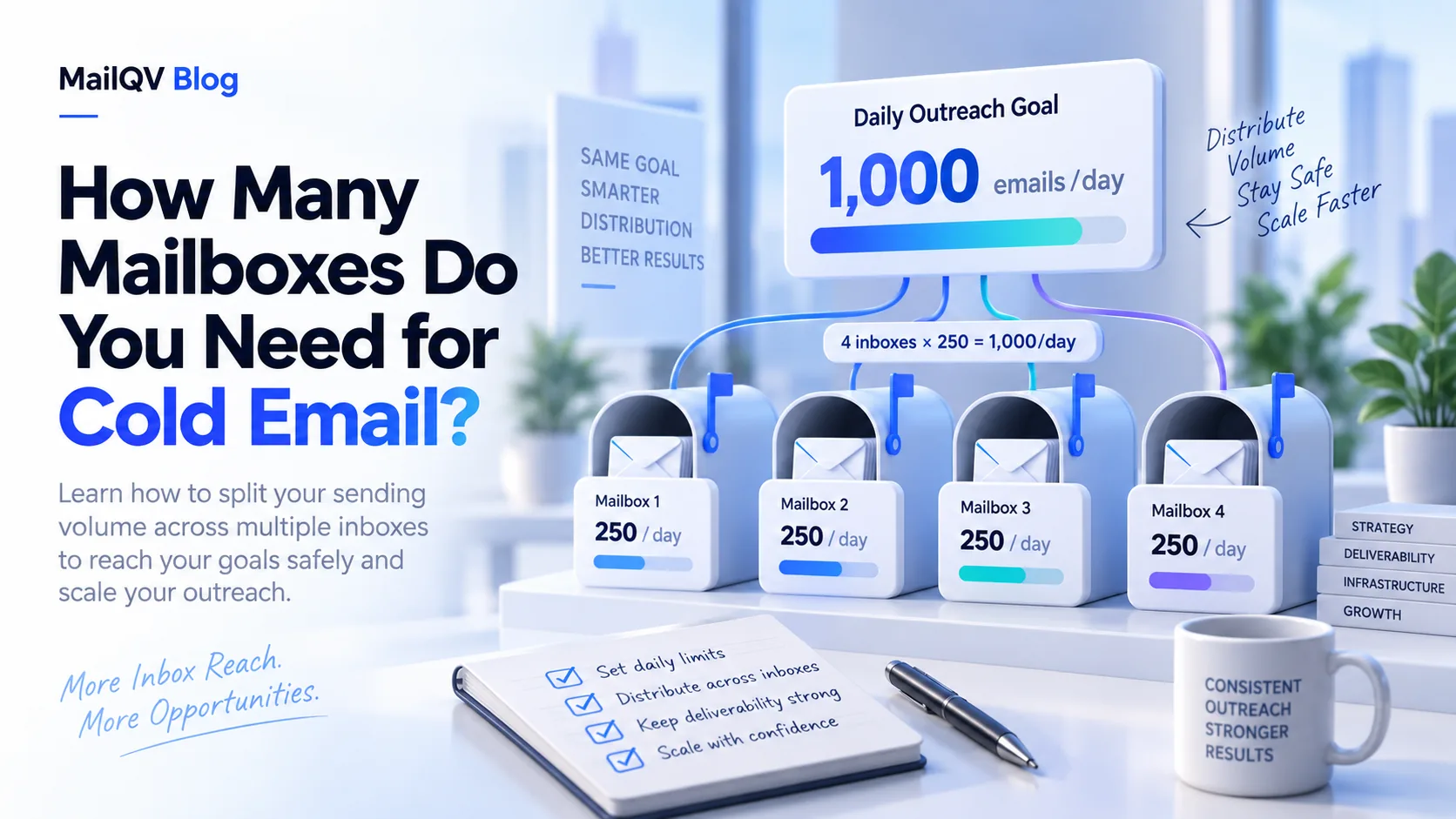
Estimate mailbox requirements with daily capacity, sequence demand, send windows and a buffer for interruptions.
From checks to campaigns