Sequences
Best Cold Email Follow-Up Sequence
A concise, adaptable cold email follow-up sequence with timing, examples and stop conditions.
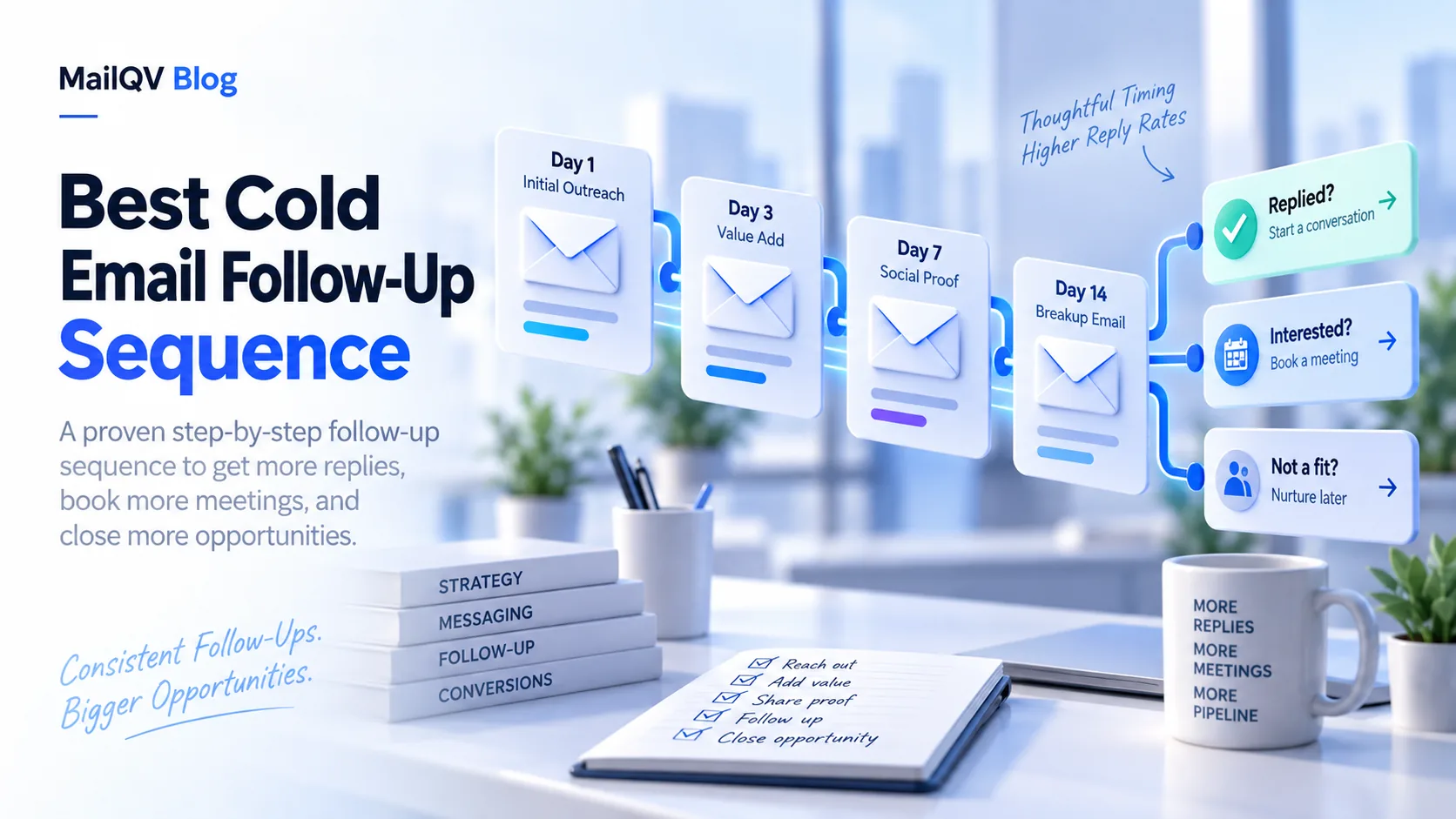
A strong default is one relevant first email followed by two concise follow-ups over roughly 8–12 business days. The best sequence adds a new reason to respond at each step and stops immediately on replies, unsubscribes or hard bounces.
A practical three-step example
Day 1: state the specific observation, connect it to a plausible problem and ask one low-friction question. Day 4: add a concrete example or helpful detail. Day 9: summarize the relevance and give the prospect an easy way to close the conversation.
Example follow-up: “Worth clarifying one point: the workflow I mentioned is designed for teams managing several sending inboxes, not high-volume newsletters. Is that relevant to your setup?”
Adjust timing to the audience
A fast-moving event may justify shorter delays; a considered B2B purchase usually needs more room. Avoid treating weekends as ordinary business follow-up days unless your audience expects it.
- Do not fake a reply with misleading subject prefixes.
- Do not resend the same paragraph.
- Keep one clear call to action.
- Stop when continuing would ignore the recipient’s signal.
Measure the whole sequence
Compare replies and negative signals by step. A follow-up that adds a few replies but creates disproportionate unsubscribes may not be worth keeping. MailQV provides editable delays and reply-aware stopping.
Put it into practice
Run measured outreach with mailbox-level control.
MailQV connects sender rotation, sequences, contacts and campaign signals without claiming guaranteed inbox placement.