Sequences
How Long Should You Wait Between Cold Email Follow-Ups?
Choose cold email follow-up delays based on business context, sending days and recipient signals.
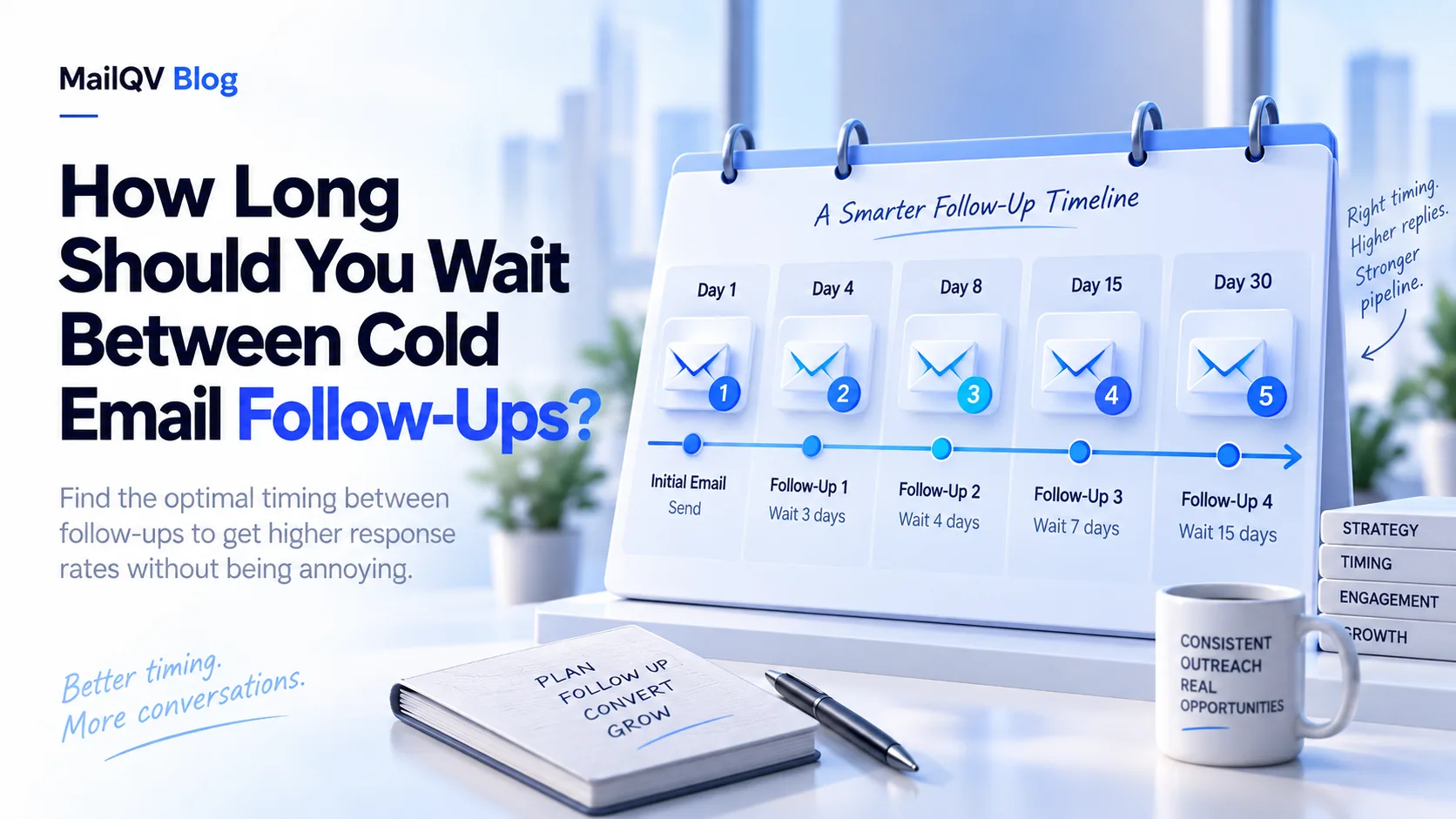
A useful starting point is 2–4 business days before the first follow-up and 4–7 business days before the next. Change the delay when the audience’s buying cycle or a genuine deadline supports it; do not compress timing simply to force more touches.
Count business context, not just days
A Friday email followed on Monday has given the prospect little working time. Campaign timezone and send window change how a nominal three-day delay feels.
For an initial Tuesday message, Friday or the following Monday can be a reasonable first follow-up. A second follow-up the next Thursday leaves space without letting context disappear.
Signals that timing is wrong
High negative replies can indicate more than a copy problem; rapid repeated contact may be irritating the audience. Provider throttling or a growing queue means actual send time can differ from the planned delay.
- Stop on any unsubscribe request.
- Do not follow up after a hard bounce.
- Route replies before another step becomes due.
- Use fewer touches when urgency is not real.
Set and revisit delays
Start with a defensible schedule, inspect step-level outcomes and adjust one variable at a time. MailQV sequences make delays explicit and keep future steps visible before activation.
Put it into practice
Run measured outreach with mailbox-level control.
MailQV connects sender rotation, sequences, contacts and campaign signals without claiming guaranteed inbox placement.