Sequences
What Is a Cold Email Sequence?
Understand cold email sequence steps, delays, stopping rules and a practical three-message example.
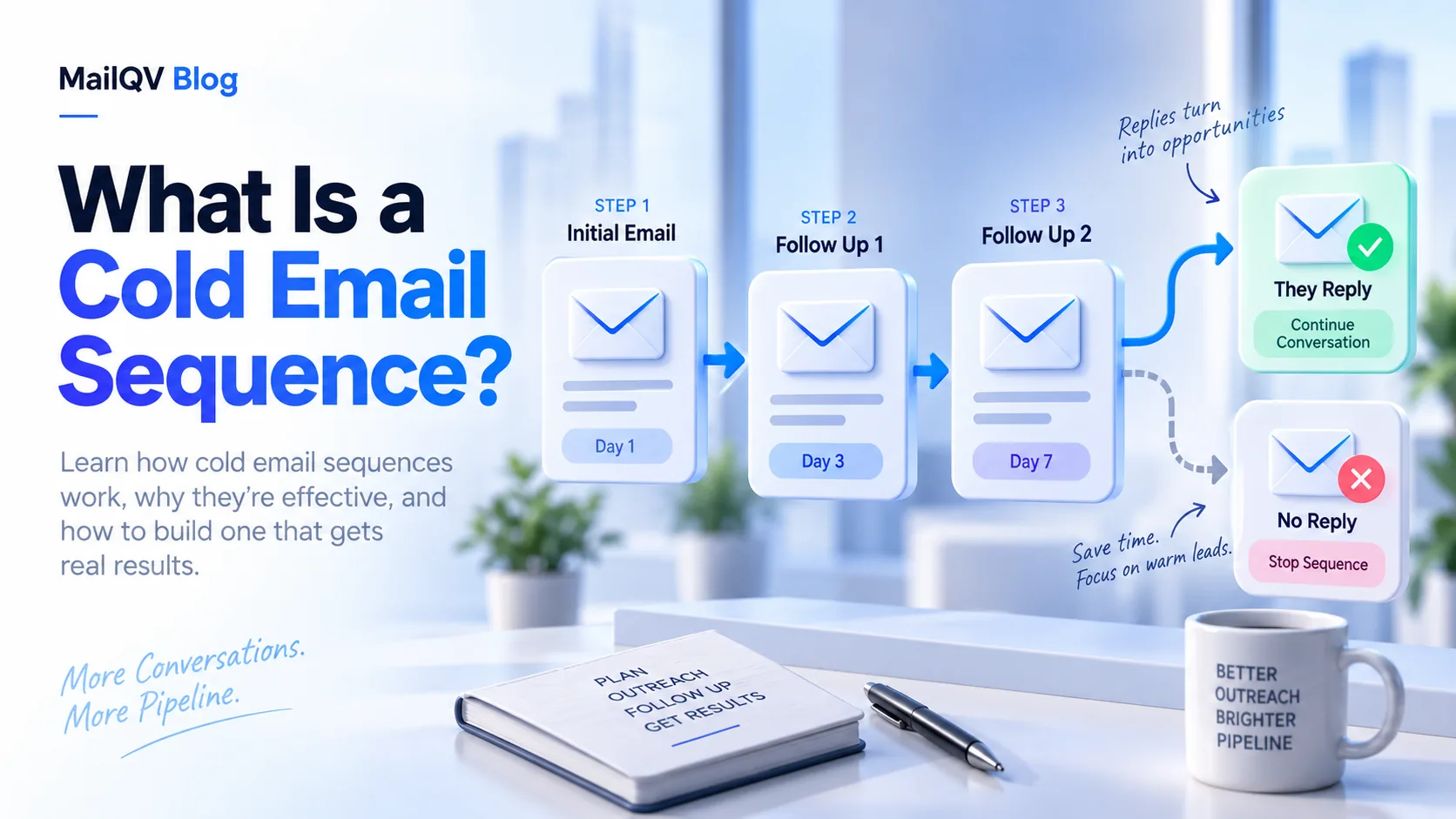
A cold email sequence is a planned series of an initial email and timed follow-ups sent to a prospect until the sequence finishes or a stop condition occurs. Replies, unsubscribes, bounces and manual stops should prevent unnecessary later messages.
The basic structure
A simple sequence might send an introduction on day 1, a short follow-up on day 4 and a final close-the-loop note on day 9. Each message should add context rather than repeat the first email.
Delays are usually based on sending days and the campaign timezone. Capacity matters: a scheduled step can wait if its sender has no eligible slots.
Stopping is part of the sequence
Automation without stop rules creates awkward messages after a prospect has replied or opted out. Define reply, unsubscribe, bounce and manual suppression behavior before launch.
- Keep the first message focused on one relevant problem.
- Use two or three useful follow-ups, not endless nudges.
- Make ownership of replies explicit.
- Test personalization fields before activation.
Build for clarity
Treat each step as a reason to contact the prospect again. MailQV keeps steps and delays visible, then stops pending follow-ups when supported reply signals arrive.
Put it into practice
Run measured outreach with mailbox-level control.
MailQV connects sender rotation, sequences, contacts and campaign signals without claiming guaranteed inbox placement.