Sequences
When Should a Cold Email Sequence Stop?
Define automatic and manual stop conditions for replies, opt-outs, bounces, completion and operational risk.
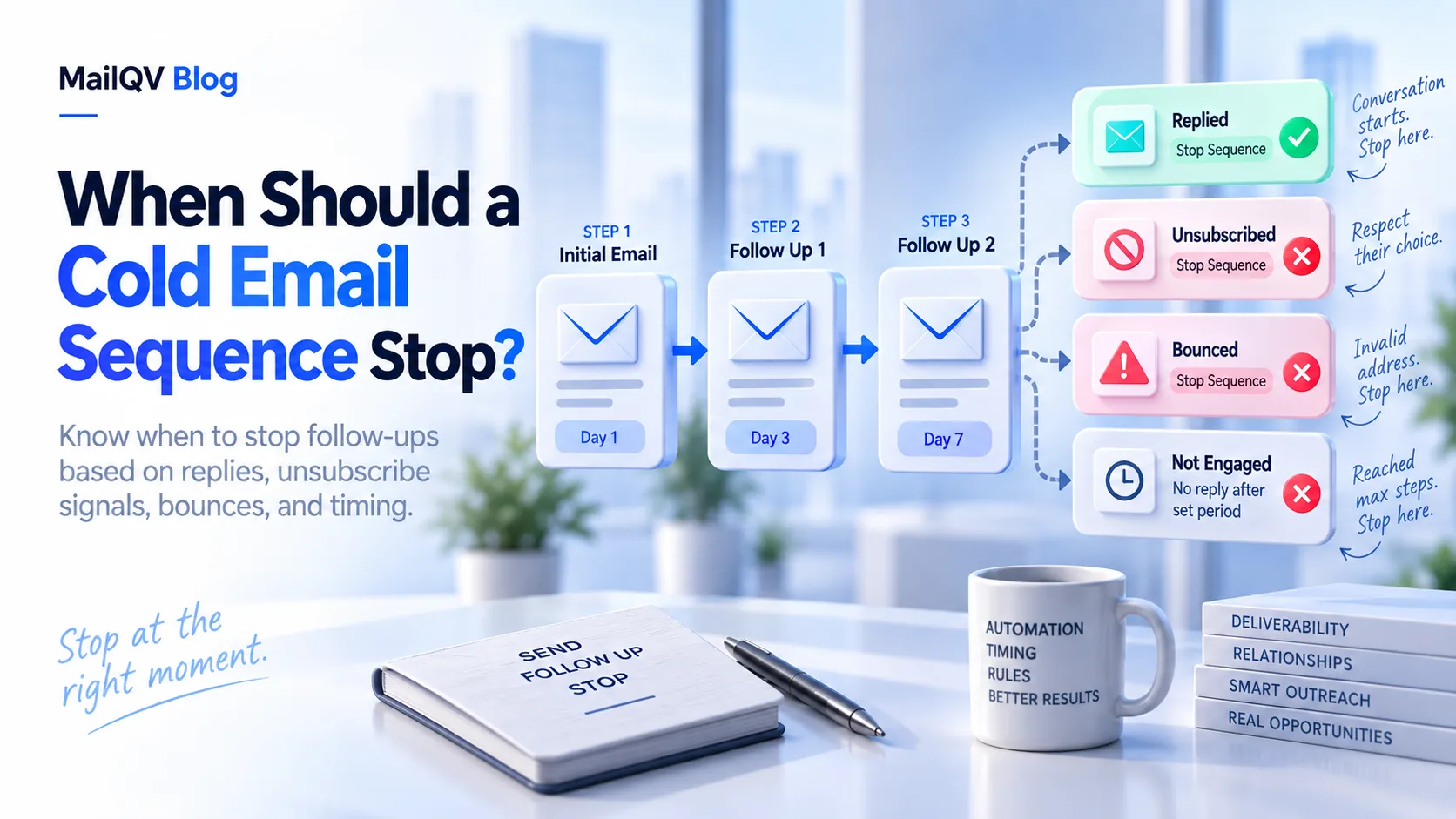
A cold email sequence should stop on a reply, unsubscribe request, hard bounce, manual suppression or completion of its planned final step. It should also pause when mailbox or campaign risk signals require review.
Mandatory operational stops
A reply changes the conversation from automation to human handling. An unsubscribe makes further outreach ineligible. A hard bounce indicates the recipient address should not be retried.
Stop checks should run when the event arrives and again immediately before sending. That second check protects against a message queued before a newer reply or opt-out.
Useful pause conditions
Not every event is a permanent stop. Provider throttling, an authentication change or unusual bounce rate can justify pausing the campaign or one mailbox.
- Reply: stop pending steps for that contact.
- Unsubscribe: globally suppress as required.
- Hard bounce: suppress the failed address.
- Manual stop: preserve reason and history.
- Final step: mark sequence complete.
Design stopping before launch
Test supported reply and bounce flows before activating a campaign. MailQV is designed to stop pending follow-ups on supported reply signals and keep contact eligibility centralized.
Put it into practice
Run measured outreach with mailbox-level control.
MailQV connects sender rotation, sequences, contacts and campaign signals without claiming guaranteed inbox placement.