Campaign operations
How to Estimate Cold Email Campaign Duration
Forecast campaign completion with mailbox capacity, follow-up demand, send windows and stop rates.
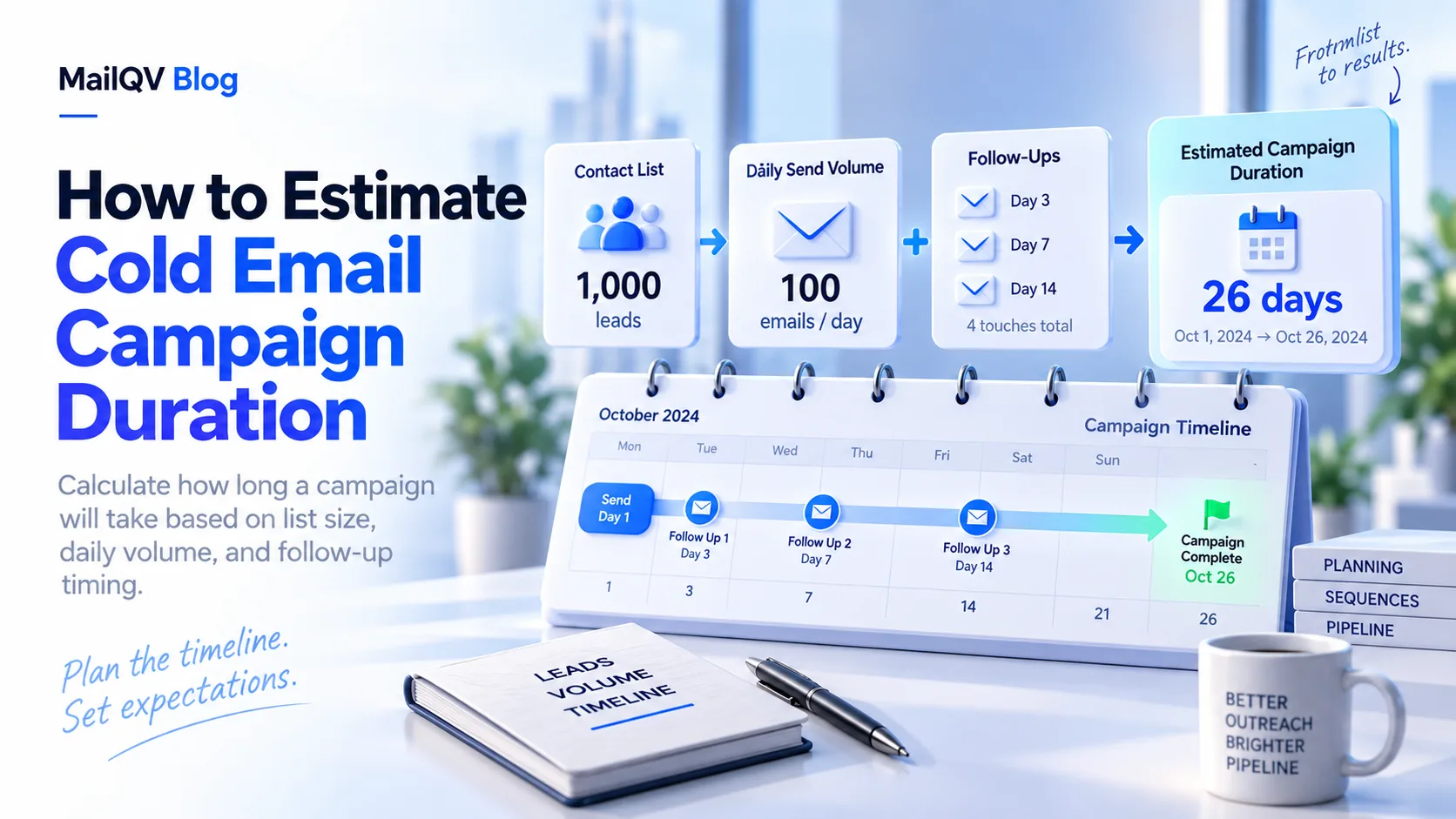
Estimate duration by scheduling first touches and every potential follow-up against eligible daily mailbox capacity. Then add buffer for replies, pauses, provider throttling, weekends and disconnected senders.
Do not divide leads by capacity only
A 1,000-lead campaign with 100 daily slots does not necessarily finish in ten days. If each lead can receive two follow-ups, later steps share those same slots.
Worst-case demand is leads × maximum steps: 1,000 × 3 = 3,000 sends. At 100 sends per sending day, that is 30 sending days. Replies and stop conditions reduce demand.
Model constraints
Calculate with sending days, not calendar days. Then account for sender eligibility and workspace allowance.
- Daily capacity across eligible mailboxes.
- Sequence delay and send-window rules.
- Expected reply, bounce and unsubscribe stops.
- Monthly quota boundaries.
- A buffer for interruptions.
Update the estimate with real data
After launch, replace assumptions with observed step completion and stop rates. MailQV capacity visibility helps planning, but any completion date remains an estimate.
Put it into practice
Run measured outreach with mailbox-level control.
MailQV connects sender rotation, sequences, contacts and campaign signals without claiming guaranteed inbox placement.